

Mammography Reporting: Supporting the Reading Workflow and the Care That Follows
Published
October 29, 2026
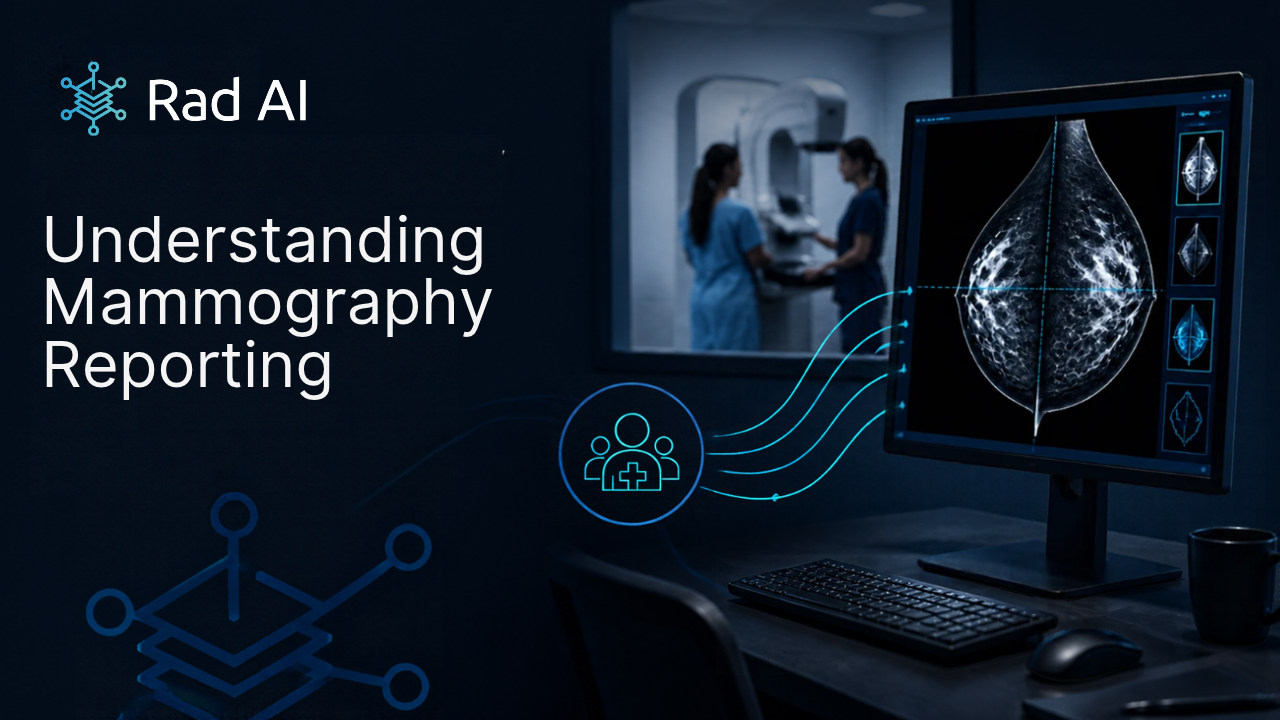

For Pupinder Jaswal, MD, breast imaging involves two very different kinds of work.
Screening mammography requires sustained concentration: a focused reading session with as few interruptions as possible. Diagnostic breast imaging brings patient conversations, additional imaging, procedures and communication with referring physicians.
“So there’s a constant exchange of information at every step of diagnostic imaging,” said Dr. Jaswal, a radiologist at Radiology Associates of Hartford.
That makes the question of whether a reporting platform supports mammography more involved than it might initially seem. It needs to fit a screening batch, a diagnostic examination and a procedure report. It also needs to pass information to the systems that support communication and follow-up.
With Breast Cancer Awareness Month bringing attention to breast health, it’s worth looking at the reporting work behind those examinations — and what breast imaging specialists need from the technology they use.
Different Workflows, Different Reporting Needs
Dr. Jaswal describes screening mammography as “very focused, do not disturb kind of a high-intensity work.” His reporting approach reflects that.
When reading screening mammograms with Rad AI Reporting, he works in batch-reading mode, relying largely on fixed templates and macros with occasional free dictation. Reporting fits a consistent routine, with room to add detail when a case requires it.
Diagnostic breast imaging calls for more flexibility. A radiologist may be working through a specific concern, discussing findings with a patient, dictating a biopsy or communicating with a breast surgeon. The report needs to capture the details of that encounter.
For this work, Dr. Jaswal has made more substantial changes to his templates and reporting style. He described completing and sending reports more quickly after making those adjustments. His broader experience with Rad AI has included ongoing feedback, help with template fields and changes to speech recognition to better support how he dictates.
Watch Dr. Jaswal discuss the different demands of breast imaging.
What Happens to the Information in the Report?
Finishing the report is one part of the workflow. The assessment and recommendations also need to reach the people and systems responsible for the next steps.
In breast imaging, that communication connects the radiologist’s interpretation to additional imaging, a procedure or follow-up care. The Breast Imaging Reporting and Data System (BI-RADS) provides a shared language for communicating assessments and recommendations. The reporting workflow needs to carry that information into the systems teams use to coordinate those next steps.
That brings the discussion back to the exchange Dr. Jaswal describes. A report needs to fit how the radiologist works and make the next step clear to the people acting on it.
Watch Dr. Jaswal discuss why human connection matters in breast imaging.
Common Questions About Rad AI and Mammography Reporting
Does Rad AI Reporting support mammography?
Yes. Rad AI Reporting supports screening and diagnostic mammography workflows through templates, macros and structured data. Depending on the integration, breast density and risk scores from imaging AI vendors such as Lunit or Therapixel can feed reports. Formulas and decision-tree logic can populate default BI-RADS assessments and recommendations for the radiologist to review and approve. The goal is a zero- or one-touch screening reporting workflow, with the radiologist reviewing and approving the report.
How does information reach mammography management systems?
Information such as BI-RADS assessments, breast density and follow-up recommendations can be sent through industry standards such as HL7 or FHIR, depending on the integration. Implementation should establish which information each connected system needs and how it will receive it.
Does Rad AI Reporting replace mammography management systems?
Rad AI Reporting supplies information to connected systems that support mammography tracking, patient communications and regulatory workflows. Responsibility for those functions remains with the systems configured to perform them.
Is AI-assisted reporting the same as AI interpreting a mammogram?
These are different functions. Reporting assistance helps create and organize clinical documentation. Imaging AI analyzes images for particular findings or measurements. Rad AI Reporting can ingest supported CAD/AI outputs through integrations; the radiologist remains responsible for reviewing and finalizing the report.
Start With the Work Your Team Does Each Day
For a practice considering a reporting change, the most useful demonstration starts with the work its breast imaging specialists already do. Bring a screening batch, a diagnostic case and a procedure report, along with the templates and macros radiologists depend on.
Then follow the information beyond sign-off. Where do the assessment and recommendations go, and which systems use them? Understanding that workflow in full will tell you more than a feature list alone.
Request a demo of Rad AI Reporting to explore how it could support your breast imaging workflow.

Expand Your Expertise
More Blogs
The Readout explores the technologies, challenges and realities shaping where care goes next.



Radiology-First AI
Radiology-first AI that works in the real world.
Built For How Radiology Actually Works
Built for Radiology. By Radiologists.