

Less Hype, More Help: AI That Improves Safety, Productivity, and Care - Written Testimony
Published
March 16, 2026

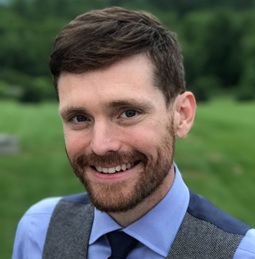
Editor's note: The following testimony was presented by Rad AI Chief Innovation Officer Demetri Giannikopoulos on March 3, 2026, to the U.S. Senate Committee on Commerce, Science and Transportation during a subcommittee session about artificial intelligence. A recording of the hearing – as well as testimony from other participants – can be found here.
Chairman, Ranking Member, and Members of the Subcommittee:
Thank you for the opportunity to testify.
I come before you as a healthcare AI expert who has deployed artificial intelligence nationwide, as a caregiver who supported my wife through cancer, as the spouse of a nurse practitioner with more than a decade of frontline primary care experience, and as a patient who has lived with multiple sclerosis for more than two decades.
These experiences are why I am here today and have fueled my more than twenty years career in healthcare. They have given me a firsthand view of how care is delivered, how decisions are made, and what happens when the system works — and when it doesn’t.
In each of these roles, I have seen the same reality: outcomes often hinge on whether a diagnosis is made quickly and accurately.
Because in healthcare, the most dangerous failure is not a machine failure. It is a missed or delayed diagnosis.
Research from Johns Hopkins Medicine, published in BMJ, estimates that nearly 800,000 Americans each year die or are permanently disabled because of diagnostic error. Extensive research has shown that errors often occur because clinicians are operating within an increasingly complex and strained healthcare system — managing rising volumes, time pressures, and expanding information.
Imagine a patient arriving in a community emergency department with sudden chest pain. A CT scan is performed. The cause is something rare but deadly: an aortic dissection — a tear in the body’s main artery.
Without rapid diagnosis and treatment, a quarter of patients can die within 48 hours. Every hour matters.
Today, AI is helping at multiple points in that patient’s care.
Within minutes, AI can analyze the images and help flag the finding so it is reviewed immediately.
When the radiologist opens the case, AI can help integrate trusted clinical guidance directly into their workflow, drawing on peer-reviewed evidence developed through organizations like the Radiological Society of North America. It does not replace the physician. It strengthens confidence and trust in the diagnosis.
Once the diagnosis is made, the care team must act quickly. The patient may need to transfer for life-saving surgery.
AI helps ensure the diagnosis is clearly communicated, documented efficiently, and shared across care teams so treatment can begin without delay.
That is productivity. That is coordinated care.
Research published by the American Heart Association shows that coordinated care pathways for aortic dissection reduce delays and improve survival.
We see this same reality in stroke care, where every minute of delay risks permanent death of millions of brain cells controlling vital functions - faster diagnosis and transfer can mean survival and less disability.
But the story does not end there.
That same scan may reveal a quiet lung mass. Not an emergency today, but something that must be followed carefully.
AI can help ensure follow-up imaging is scheduled, care teams are alerted, and patients do not fall through the cracks months or years later.
Unfortunately, over half of patients never receive the follow-up care their conditions require. For those Americans, the risk is not theoretical. It becomes their reality.
This is not just about efficiency. It is about trust.
We are asking clinicians to manage rising imaging volumes, expanding documentation requirements, and increasingly complex patient needs, while the healthcare workforce is shrinking and burnout remains high.
AI, when implemented responsibly, is not replacing clinicians. It is acting as a pressure release valve, helping reduce cognitive burden and supporting clinicians in delivering safe, timely care.
I have deployed both FDA-cleared AI tools and other clinical software that does not require FDA clearance. In both cases, these systems undergo extensive clinical, privacy, and governance review before deployment. Physicians remain responsible for patient care, and these tools operate within existing healthcare laws and professional accountability frameworks.
Based on my experience deploying these systems nationwide, the most important determinant of safety is not only how they are evaluated before deployment, but how they are governed, monitored, and supported once they are in clinical use.
This is where thoughtful lifecycle governance and consistent national standards are essential.
This is especially important for rural and underserved communities, where access to subspecialty expertise may be limited. AI can help extend the reach of clinical expertise and support clinicians caring for patients regardless of geography and access to local resources.
AI is most powerful not when it replaces human judgment, but when it strengthens it. AI will not replace physicians. It will help them do what they trained their entire lives to do: care for patients.
Less hype. More help.
That is not a future promise. It is happening today.
Because behind every scan is a person. A family. And a moment where getting the diagnosis right can change everything.
Thank you. I look forward to your questions.

Expand Your Expertise
More Blogs
The Readout explores the technologies, challenges and realities shaping where care goes next.

.png)
Radiology-First AI
Radiology-first AI that works in the real world.
Built For How Radiology Actually Works
Built for Radiology. By Radiologists.