

Guides and Education
A collection of clinical insights, real-world perspectives and educational resources.
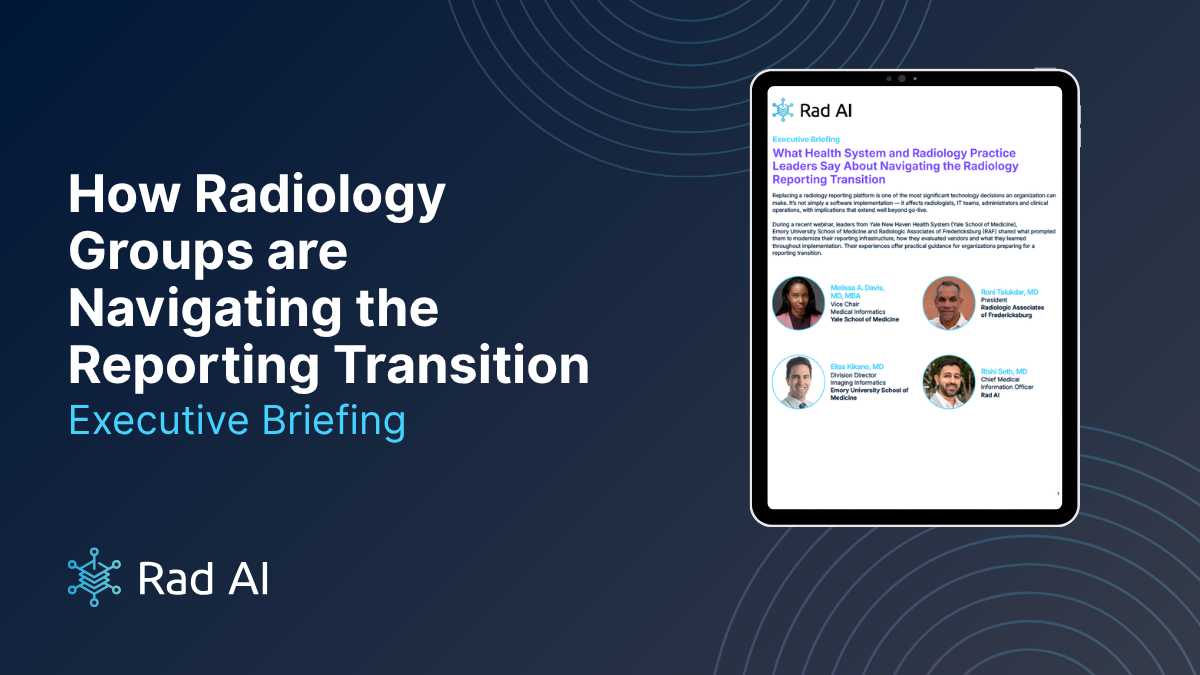


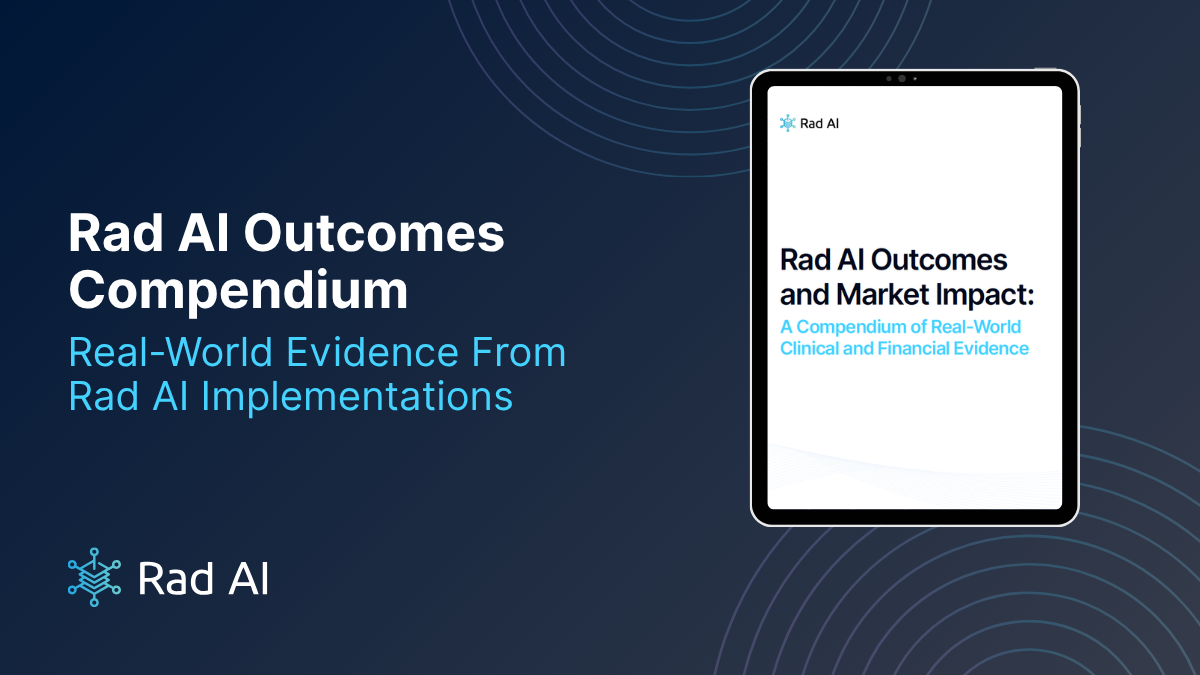
Rad AI Outcomes Compendium
Explore customer case studies, deployment data and published research showing measurable impact — from time saved and increased productivity to improved report quality, stronger follow-up adherence and financial ROI.
.png)
Rad AI Overview
Learn more about Rad AI solutions for AI-powered reporting and follow-up in this brief overview.
.png)
Radiology Reporting Transition Resource Hub
Strategic guidance, technical insights and real-world results to help clinical, operational and IT leaders navigate the transition confidently.
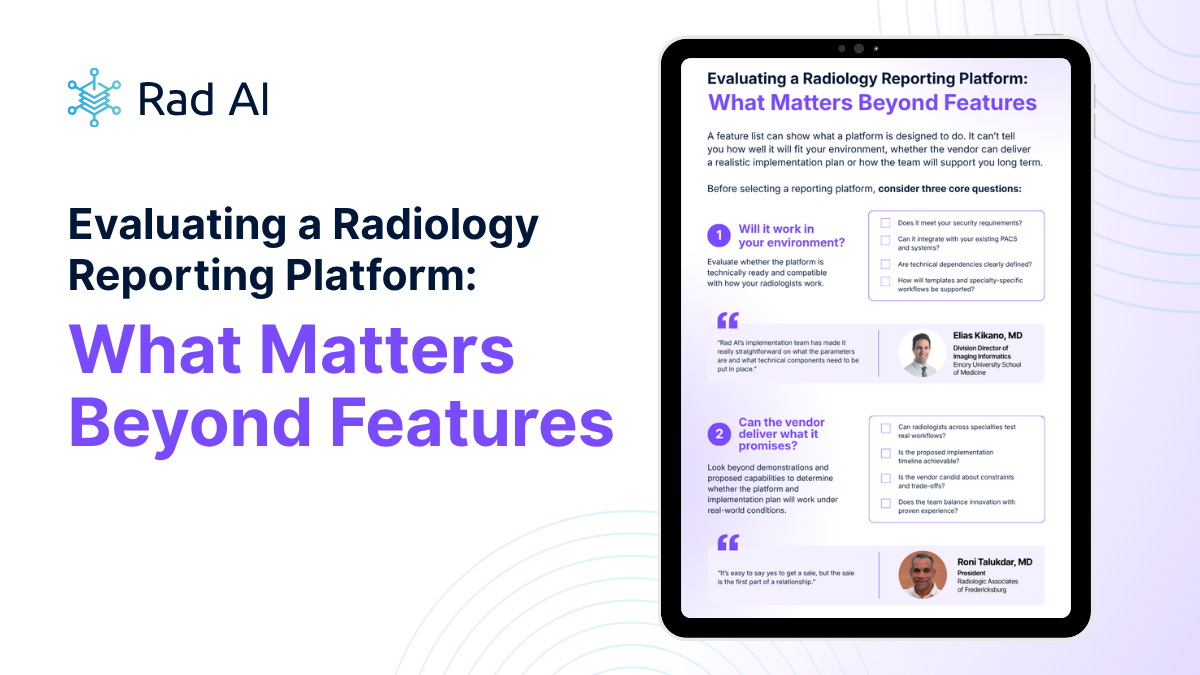
Evaluating a Radiology Reporting Platform: What Matters Beyond Features
A feature list can show what a platform is designed to do. It cannot tell you how well it will fit your environment, whether the vendor can deliver a realistic implementation or how the team will support you when challenges arise.
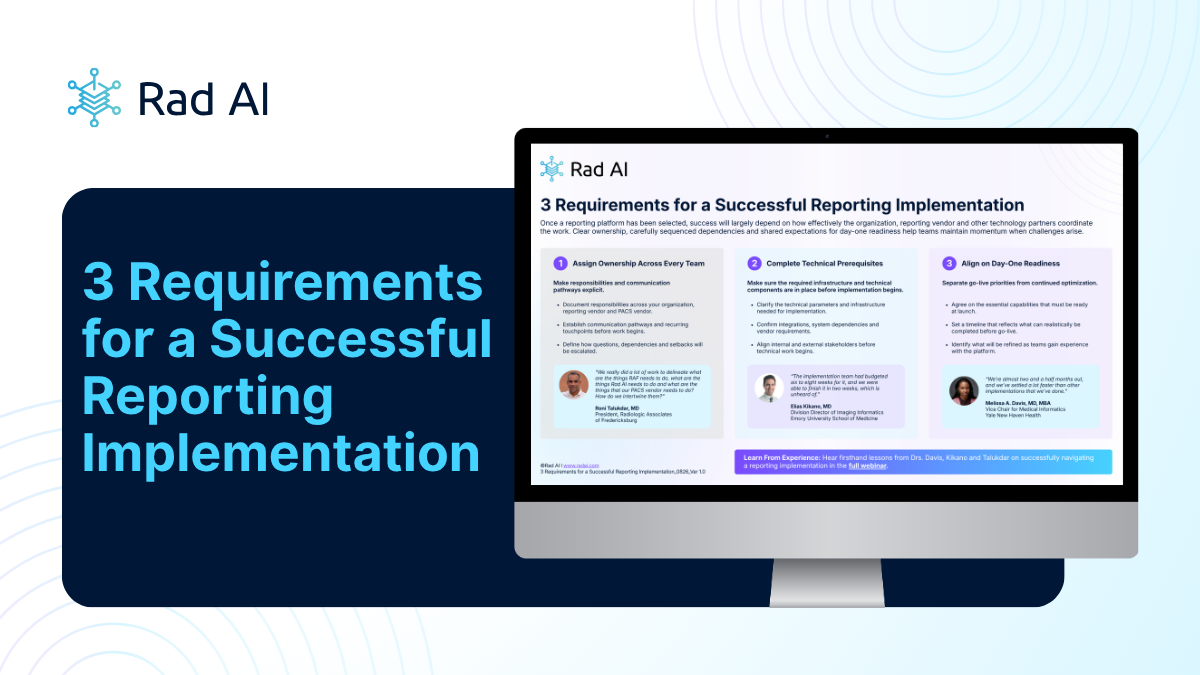
3 Requirements for a Successful Reporting Implementation
Once a reporting platform has been selected, success will largely depend on how effectively the organization, reporting vendor and other technology partners coordinate the work.
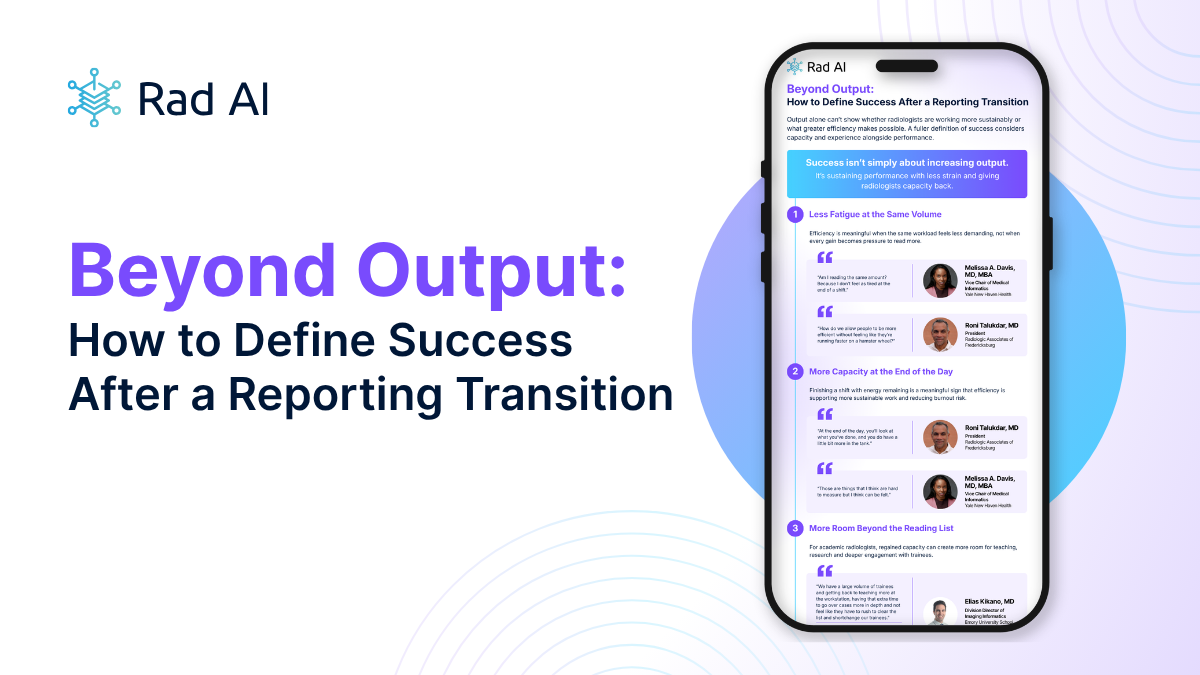
Beyond Output: How to Define Success After a Reporting Transition
Output alone cannot show whether radiologists are working more sustainably or what greater efficiency makes possible. A fuller definition of success considers capacity and experience alongside performance.
.png)
Where Does a Radiologist's Time Actually Go?
See how workflow friction accumulates across a radiologist's day and learn how modern reporting technology can help reduce reporting time, improve productivity and create a better reporting experience.
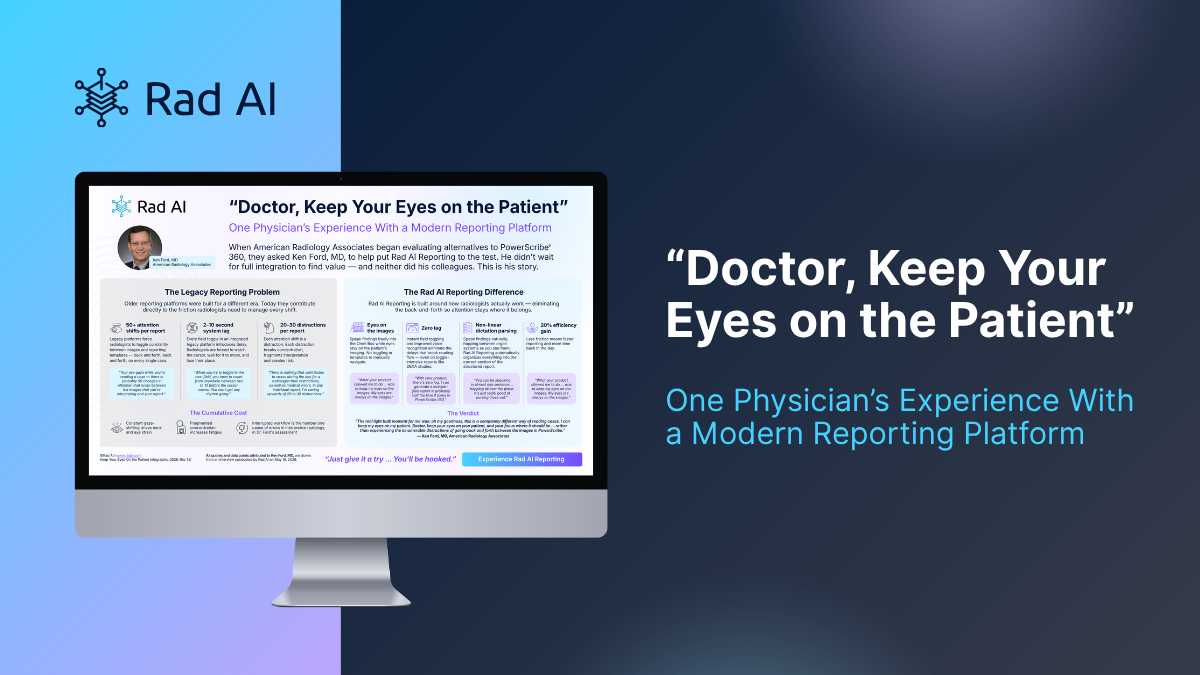
"Doctor, Keep Your Eyes on the Patient."
Learn how reducing reporting friction can help radiologists spend less time managing technology and more time focused on image interpretation and patient care.

Who Writes AI Impressions Best? Human Versus AI
New study explores who the winner is when comparing human-authored, custom AI-generated and generic AI-generated impressions.
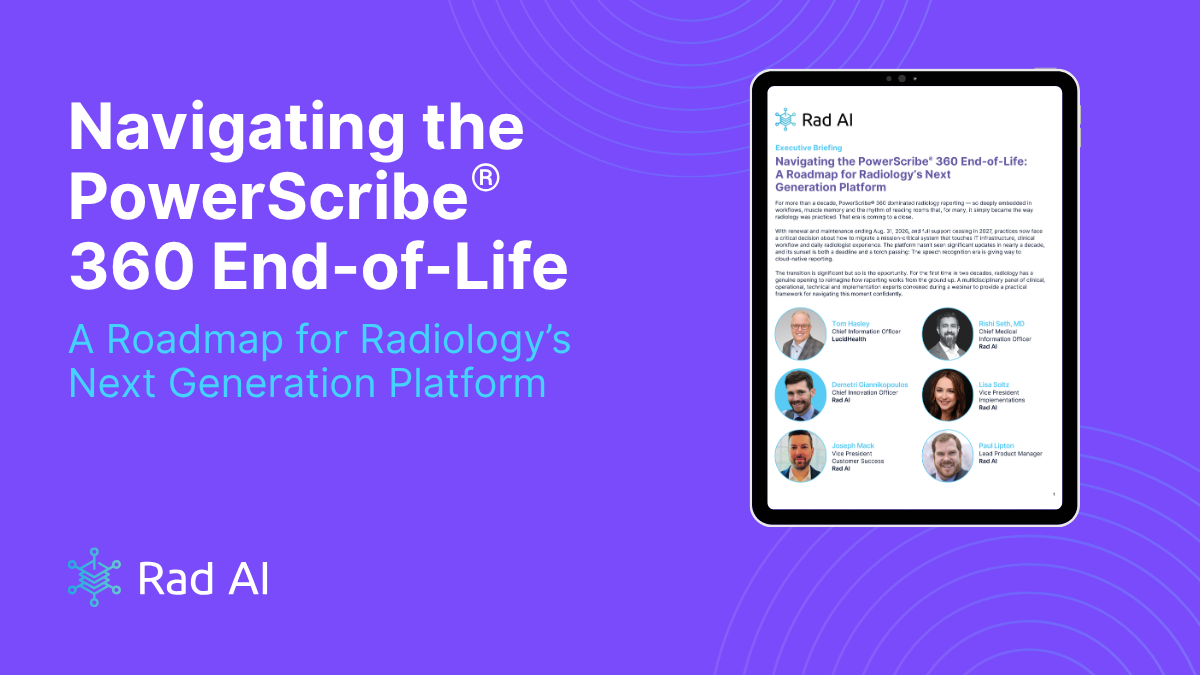
Navigating the PowerScribe® 360 End-of-Life
A practical framework for assessing this reporting platform transition from a multidisciplinary panel of clinical, operational, technical and implementation experts providing
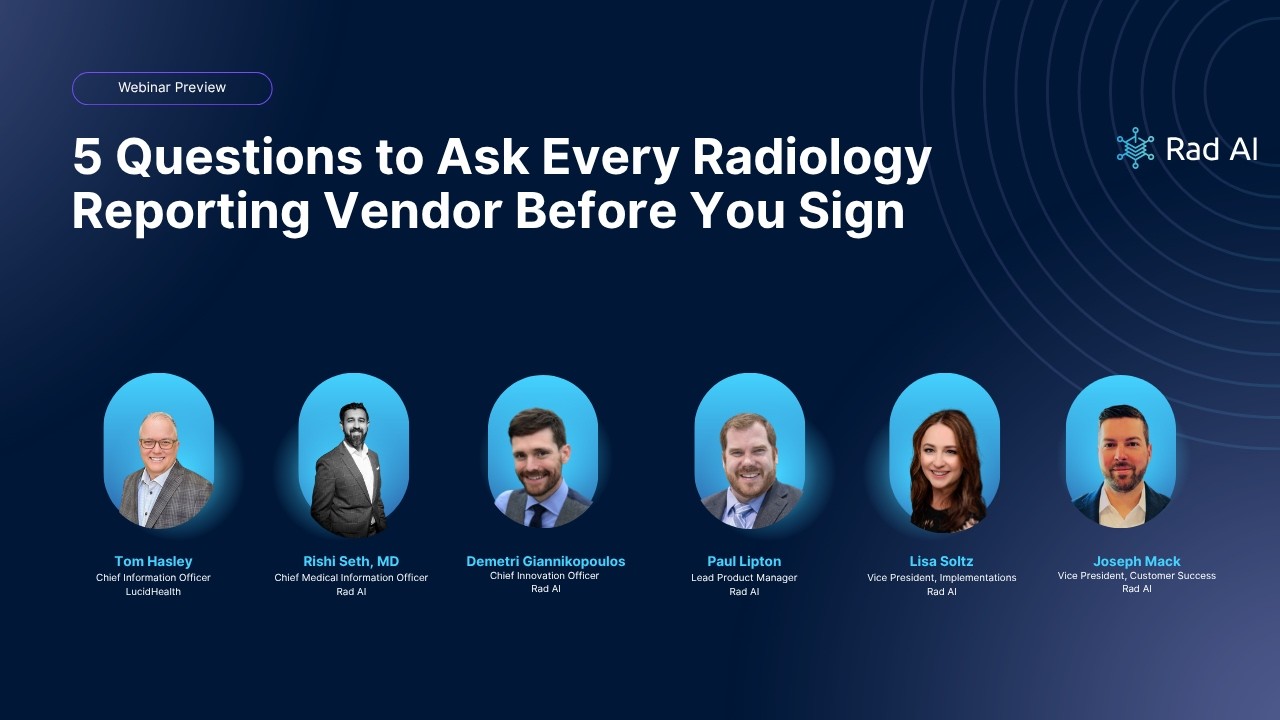
5 Questions to Ask Every Radiology Reporting Vendor Before You Sign
In this clip, a multidisciplinary panel — including a radiology practice chief information officer, a practicing neuroradiologist and implementation leaders who have guided organizations through change management — share the five questions that cut through the noise and surface the real differences between vendors.
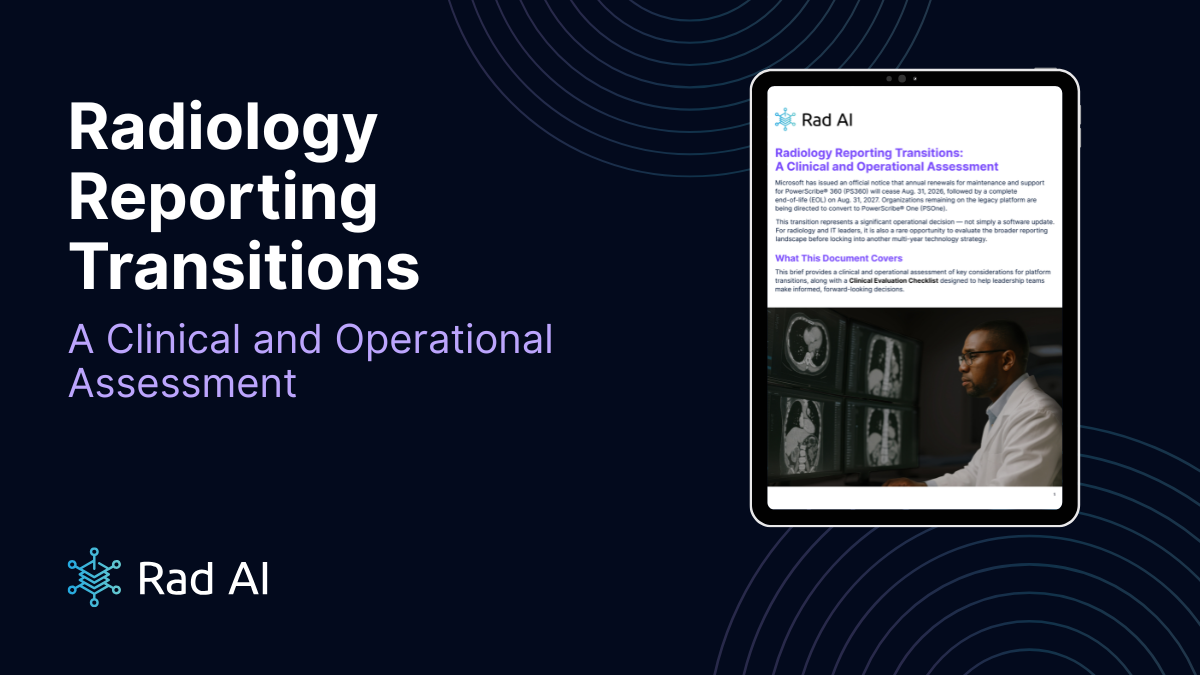
Radiology Reporting Transitions: A Clinical and Operational Asessment
Microsoft has issued an official notice that annual renewals for maintenance and support for PowerScribe® 360 (PS360) will cease Aug. 31, 2026, followed by a complete end-of-life (EOL) on Aug. 31, 2027. Organizations remaining on the legacy platform are being directed to convert to PowerScribe® One (PSOne).
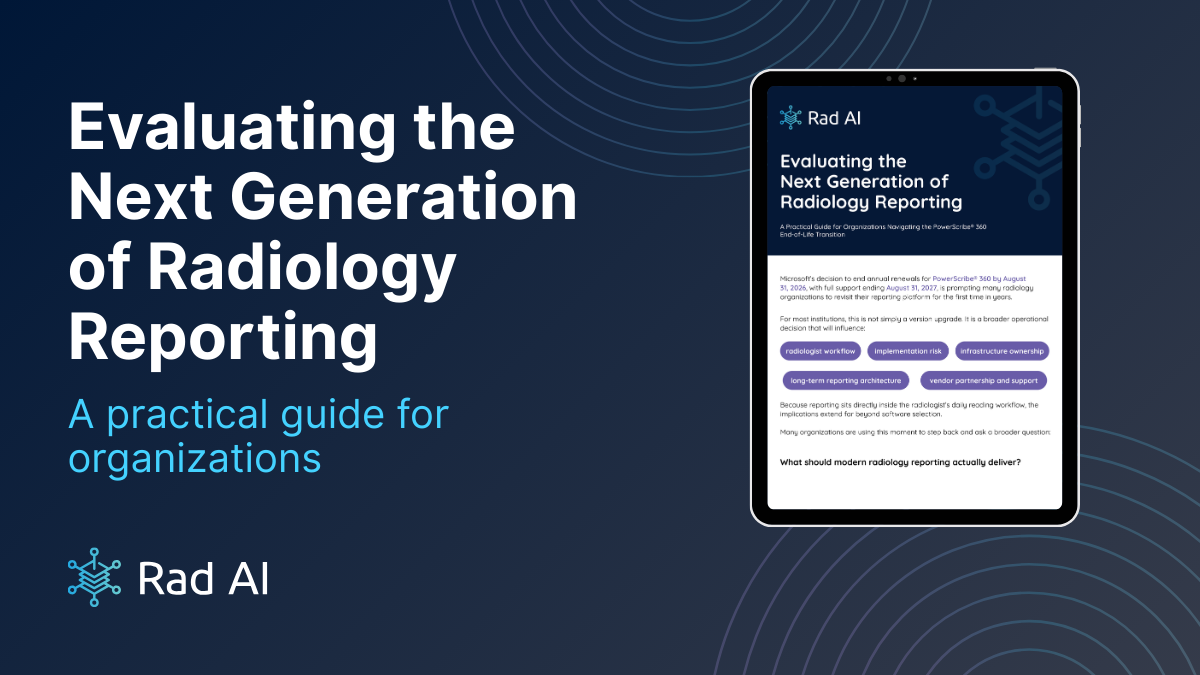
Evaluating the Next Generation of Rad AI Reporting
A Practical Guide for Organizations Navigating the PowerScribe® 360 End-of-Life Transition
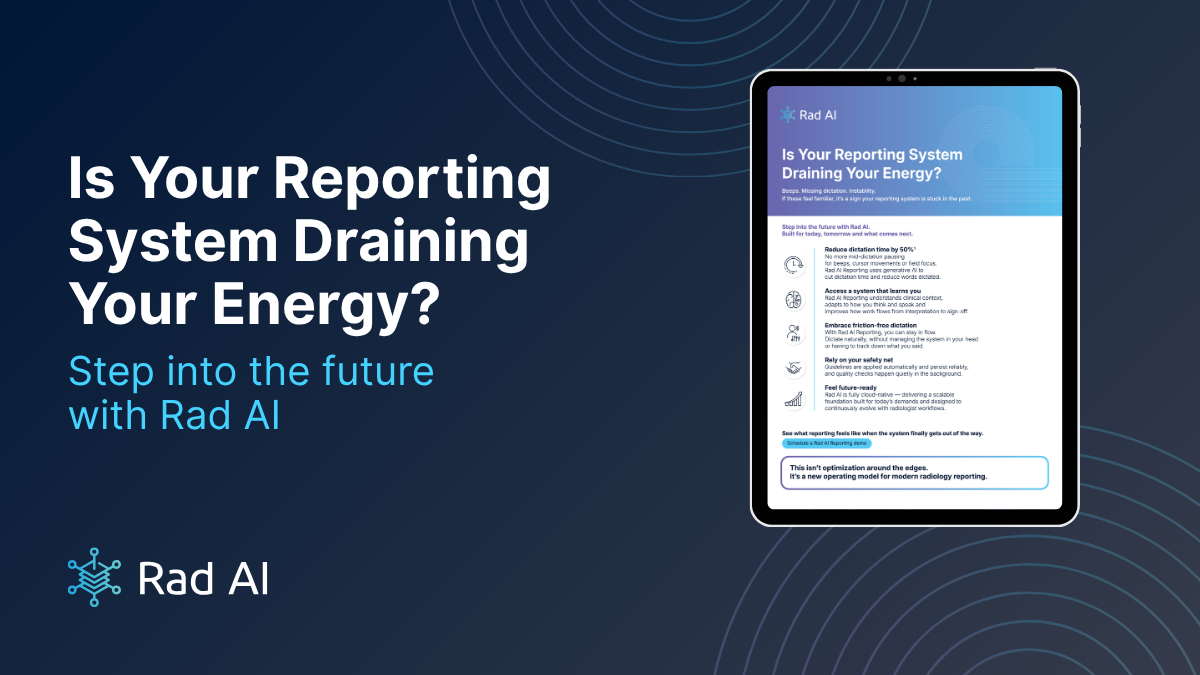
Is Your Reporting Draining Your Energy?
Beeps. Missing dictation. Instability. If these feel familiar, it's a sign your reporting system is stuck in the past.
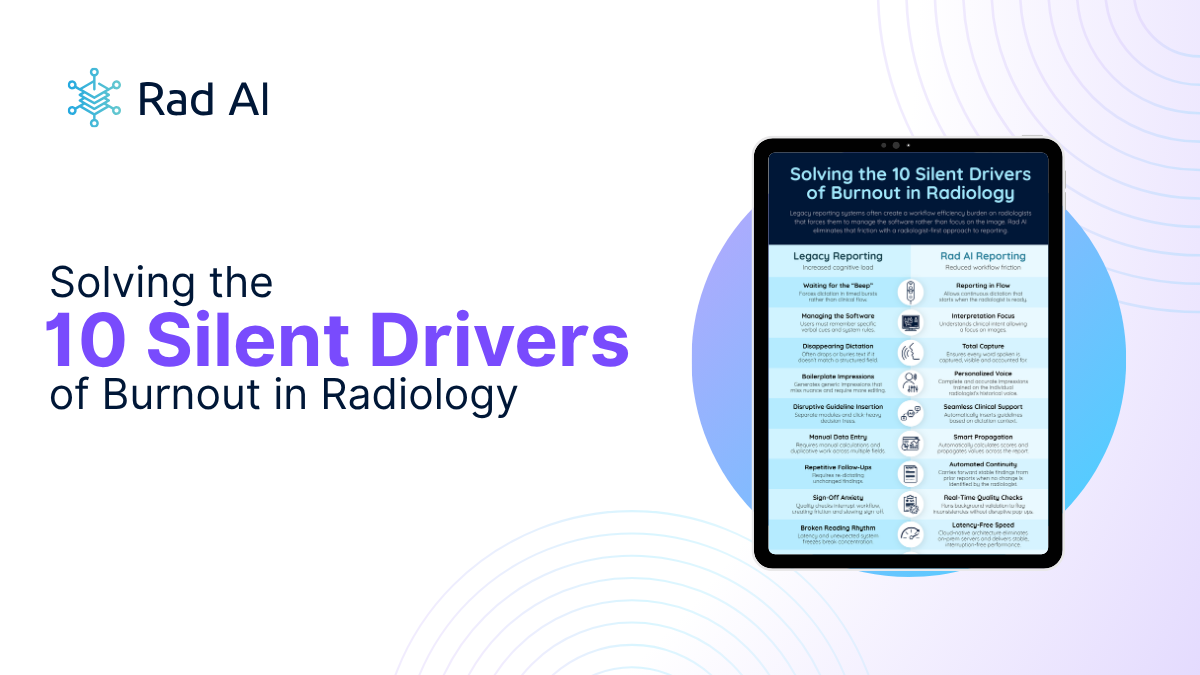
Solving the 10 Silent Drivers of Burnout in Radiology
Legacy reporting systems often create a workflow efficiency burden on radiologists. Here's how a modern reporting solution helps eliminate that friction.
Rad AI Reporting + RSNA Ventures: In-Workflow Diagnostic Support in Radiology
Radiologists today face increasing pressure — from rising imaging volumes to more complex cases and expanding clinical knowledge. In this demo, see how RSNA Ventures and Rad AI are working together to address these challenges by delivering trusted, peer-reviewed RSNA insights directly into the radiologist’s workflow — at the point of interpretation. Rather than adding new steps, this approach embeds actionable information directly into the Rad AI Reporting experience, aligned to the case and clinical context.
Waiting for the Beep? There’s a Better Way
Legacy reporting systems often require radiologists to wait for an audible beep before they can begin dictating. While intended to ensure accurate capture, this forced pause interrupts natural workflow and slows productivity. Over time, these small delays add up, leading to inefficiencies, frustration and lost time.
RSNA Ventures & Rad AI Partnership: Innovating at the Radiologist's Point of Interpretation
Clinical and industry leaders explore how trusted, in-context insights delivered in-workflow may shape the next era of radiology practice.
CMIO Principles for the Strategic Implementation of Radiology AI
Three CMIOs discuss how radiology AI has shifted from diagnostic novelty to a crucial tool to enable workflow resilience.
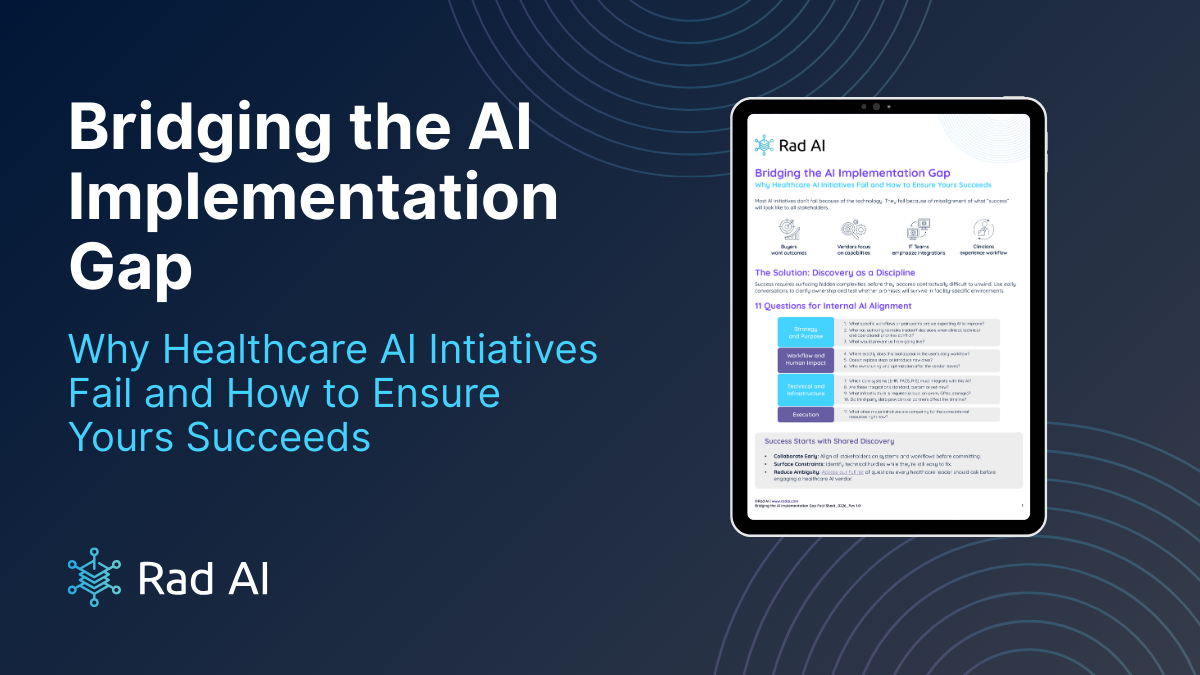
Bridging the AI Implementation Gap
Explore why healthcare AI initiatives fail with tips on how to make yours succeed.

Radiology: A Century of Innovation
Many of healthcare’s most foundational technologies began in radiology. Here are selected highlights illustrating how radiology technology has transformed patient care.
Stay Ahead of What's Next in Radiology
Sign up for our monthly newsletter to get the latest Rad AI news and resources delivered to your inbox.


Explore More
Keep the
Conversation Going
Find more perspectives, resources and stories from across radiology and healthcare AI.
Blog
What's on our mind, and what the industry is discussing.

News
The latest interviews, partnership announcements, awards and company milestones.
Perspectives
The realities of radiology today featuring Rad AI customers and partners.
Webinars
In-depth discussions on the AI trends and workflow shifts reshaping radiology.


Radiology-First AI
Built For How Radiology Actually Works
Built for Radiology. By Radiologists.